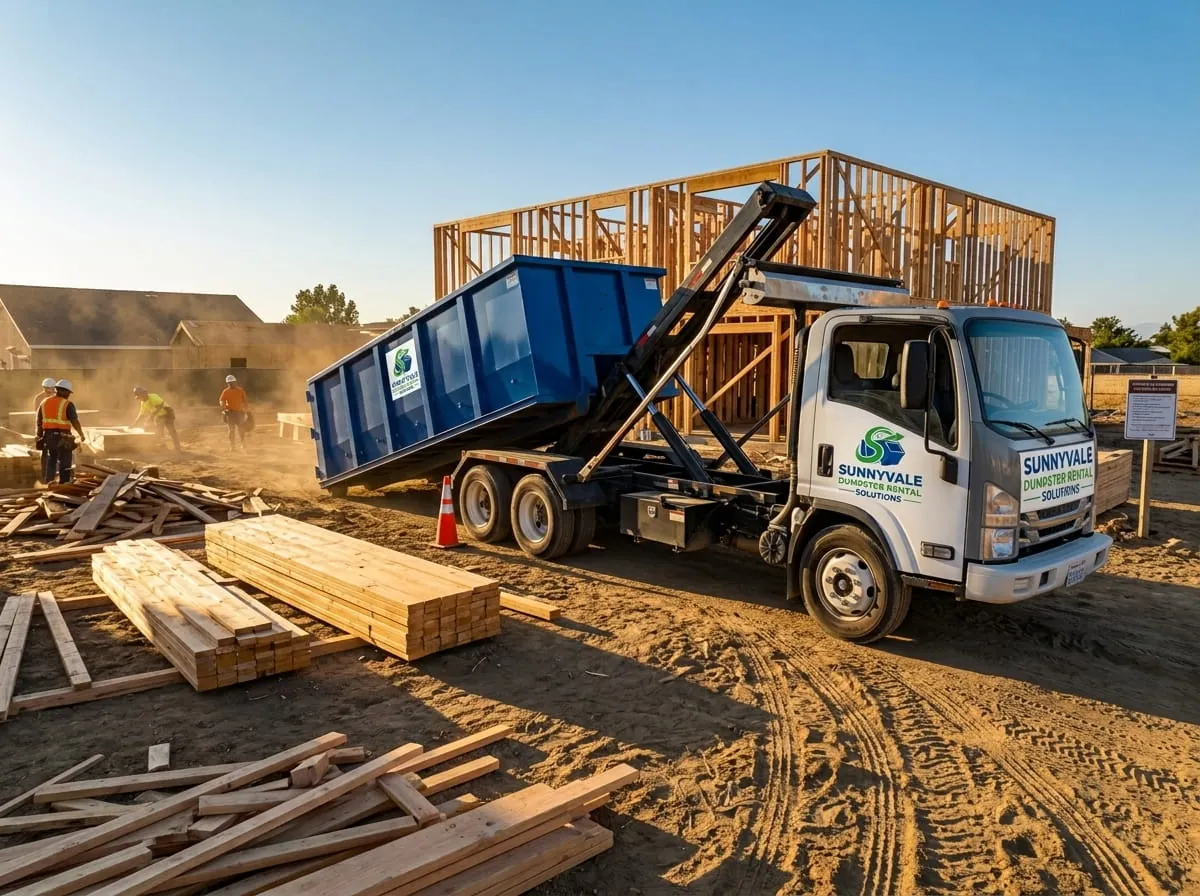
Remodels, ADUs, and new builds are everywhere across Silicon Valley right now, and every one of them generates a pile of construction and demolition (C&D) debris. Wood offcuts, busted drywall, broken concrete, tear-off roofing, old fixtures — it adds up fast, and how you handle it matters more than most contractors and homeowners expect. Toss it all in one bin and haul it to the wrong place, and you can end up with rejected loads, overweight fees, and a job site that stalls out waiting on a swap.
This guide walks through construction debris disposal in Sunnyvale, CA the right way: what counts as C&D, how California’s recycling and diversion requirements shape your workflow, and the practical calls — sorting, right-sizing, and swap scheduling — that keep a project moving. If you just want to get a bin on site, call us at (669) 332-3989 and we’ll size it for your job.
What Counts as Construction & Demolition Debris
C&D debris is the material generated when you build, renovate, or tear down a structure. On a typical Sunnyvale remodel or ADU project, that means:
- Wood — framing offcuts, plywood, subfloor, trim, pallets
- Drywall — gypsum board scrap from demo and new hangs
- Concrete, brick & masonry — broken slab, footings, pavers, block
- Roofing — asphalt shingle tear-off, underlayment, flashing
- Fixtures & finishes — cabinets, countertops, doors, windows, tile, old plumbing and lighting
- Metals — conduit, rebar, ductwork, framing connectors
What C&D is not: hazardous material. Paint, solvents, adhesives, asbestos-containing material, treated or contaminated soil, and similar items are handled through separate, regulated channels — never mix them into a debris bin. If you’re unsure whether something qualifies, ask before you load it.
California Recycling & Diversion Requirements
California has pushed hard on keeping construction waste out of landfills, and the Bay Area is at the leading edge of it. The state’s green building standards (CALGreen) set a baseline expectation that a significant share of C&D material from covered projects gets recycled or diverted rather than dumped. On top of that, many Bay Area cities layer on their own Construction & Demolition Debris ordinances that require permitted projects to divert a set percentage of debris and, in a lot of cases, to document it with weight tickets or a recycling report before the city will sign off.
Rule of thumb: if your project pulled a building permit, assume a diversion requirement applies — and that you’ll need paperwork to prove it. Confirm the exact percentage and reporting steps with the City of Sunnyvale or the relevant Santa Clara County jurisdiction before demo day.
The reason we say “confirm with your city” is that the specific threshold, the covered project types, and the forms all vary by jurisdiction and change over time. We won’t quote you a number that might be wrong for your permit. What we can tell you is that the way you handle debris on site — especially how well you keep loads separated — is what makes hitting those numbers easy or painful.
Sort Clean Loads to Hit Diversion & Save Money
A “clean load” is a bin filled with a single, recyclable material stream — all concrete, all wood, all metal — with no trash mixed in. Clean loads are the single biggest lever you have on a C&D job, for two reasons:
- They divert at a much higher rate. A pure concrete or clean wood load can be routed straight to a recycler. A mixed bin has to be picked through at a sort facility, and anything that can’t be separated ends up counted as landfill.
- They protect your documentation. When your loads come back with clean recycling tickets, the diversion report that satisfies your permit practically writes itself.
Set up simple staging on site: one zone for wood, one for metal, one for heavy inerts (concrete/masonry), and one for genuine trash. It costs a few minutes of labor and pays back in disposal rates and permit compliance. For mixed demolition where separation isn’t practical, our demolition debris removal service is built to handle the tear-out and route material appropriately.
Why Heavy Debris Needs a Dedicated Bin
Concrete, brick, asphalt, dirt, and tile are heavy — dense enough that a bin only a third full can already be at its weight limit. Mix that heavy material into a general debris bin and you create two problems at once: you blow past the weight allowance (hello, overage fees), and you contaminate what would otherwise be a clean, high-diversion inert load.
The right move is a dedicated bin for heavy debris. These are typically smaller-capacity boxes rated for the weight, and the material inside goes straight to a concrete/aggregate recycler. If your project has any meaningful volume of slab, footings, or masonry, talk to us about concrete and heavy debris disposal so we can spec a bin that won’t leave you paying by the ton for a surprise.
| Debris Type | Typical Density | Best Bin Approach |
|---|---|---|
| Concrete, brick, asphalt, tile, dirt | Very heavy | Dedicated heavy-debris bin, filled by weight |
| Wood, framing, subfloor | Light to moderate | Separate clean-wood load for recycling |
| Drywall / gypsum | Moderate | Keep separate where a gypsum recycler is used |
| Roofing tear-off | Heavy (asphalt shingle) | Dedicated bin sized for weight |
| Mixed remodel debris & fixtures | Light to moderate | General C&D bin, right-sized to volume |
Not sure which of these your job is going to produce most of? Call (669) 332-3989 and describe the scope — we’ll help you split it into the right combination of bins.
Right-Sizing Your Dumpster
Ordering the wrong size is one of the most common (and avoidable) ways a C&D budget goes sideways. Too small, and you’re paying for extra swaps and burning schedule waiting on them. Too big, and you’re paying to haul air — while also tempting a heavy bin to go overweight before it looks full.
Match the box to the material
Volume-heavy, lighter debris — think a whole-house remodel with lots of framing, drywall, cabinetry, and roofing — is where a larger box shines. For jobs like that, our 30-yard dumpster gives you room to keep the site clear between swaps. For dense material, resist the urge to upsize; the limit is weight, not volume, so a smaller dedicated bin is usually the smarter (and cheaper) call.
Plan for the whole project, not just day one
Think through the full sequence — demo, framing, finishes — because each phase throws off a different debris stream. A remodel might want a heavy bin during demo, then a general C&D box for the build-out. Our team spec’s this all day for Sunnyvale and Santa Clara County contractors; browse construction dumpster rental options or just call and we’ll map it to your phases.
Swap Scheduling: Keep the Job Moving
On an active site, a full bin that can’t be emptied is a work stoppage. The fix is to think about swaps before the bin fills, not after. A few habits that keep crews productive:
- Call for a swap at about 80% full, not 100% — it builds in lead time so the empty arrives before you’re stuck.
- Tie swaps to phase changes. When demo wraps, that’s a natural point to pull the heavy bin and drop the general C&D box.
- Keep the bin loadable. Clear access, don’t overfill above the rails, and keep prohibited items out so the haul isn’t refused.
- Give a heads-up on tight sites. Sunnyvale lots and driveways can be narrow — tell us about access constraints so placement and swaps go smoothly.
When you rent from a responsive local hauler, swap scheduling becomes a non-event: you call, the empty shows up, and the crew never breaks stride.
Do It the Right Way in Sunnyvale
Disposing of construction debris the right way isn’t complicated — it’s just deliberate. Know what’s in your waste stream, sort clean loads, give heavy material its own bin, right-size to the job, and schedule swaps ahead of the fill line. Do that and you’ll meet your city’s diversion requirements, keep disposal costs predictable, and keep the project on schedule.
Sunnyvale Dumpster Rental Solutions serves Sunnyvale and all of Santa Clara County with the right bins and the local know-how to keep your build moving. Ready to set it up? Reach out through our contact page or call (669) 332-3989 today.
Founder, Sunnyvale Dumpster Rental Solutions — sharing straight advice from more than 15 years of local hauling experience.